Introduction
m6A-CAPred, a computational framework for accurately classifying potentially pro-cancer and normal m6A modification sites at the base-resolution level. By learning the domain characteristics of m6A modification revealed from a large array of cancer and normal tissues contexts, m6A-CAPred achieved an average AUROC of 0.894 tested on independent datasets. Based on the proposed model, we then conducted a large-scale prediction on ~430,000 experimentally validated m6A sites to identify potentially cancer-associated m6A residues.
Table
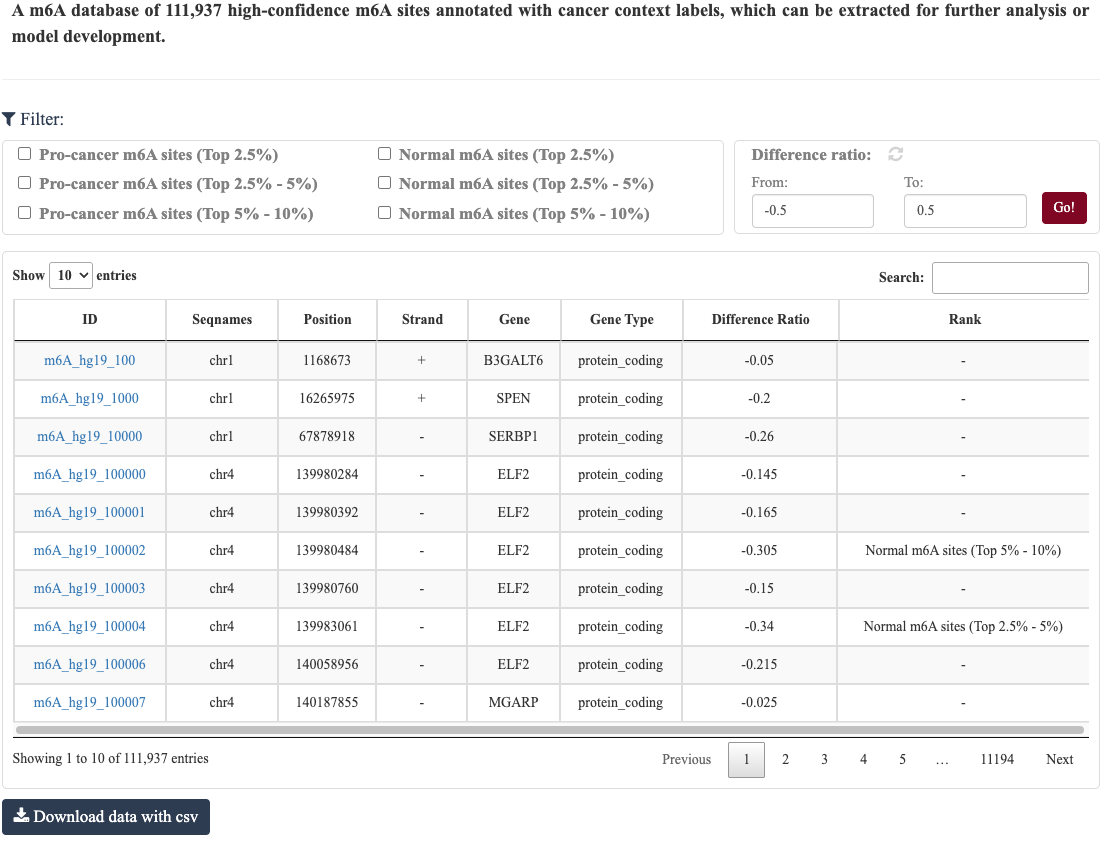
We have uploaded a database of 111,937 high-confidence experimentally validated m6A sites identified in at least two independent studies. Users could filter data by selecting the range of counts. Details can be downloaded from the button below the table in CSV format.
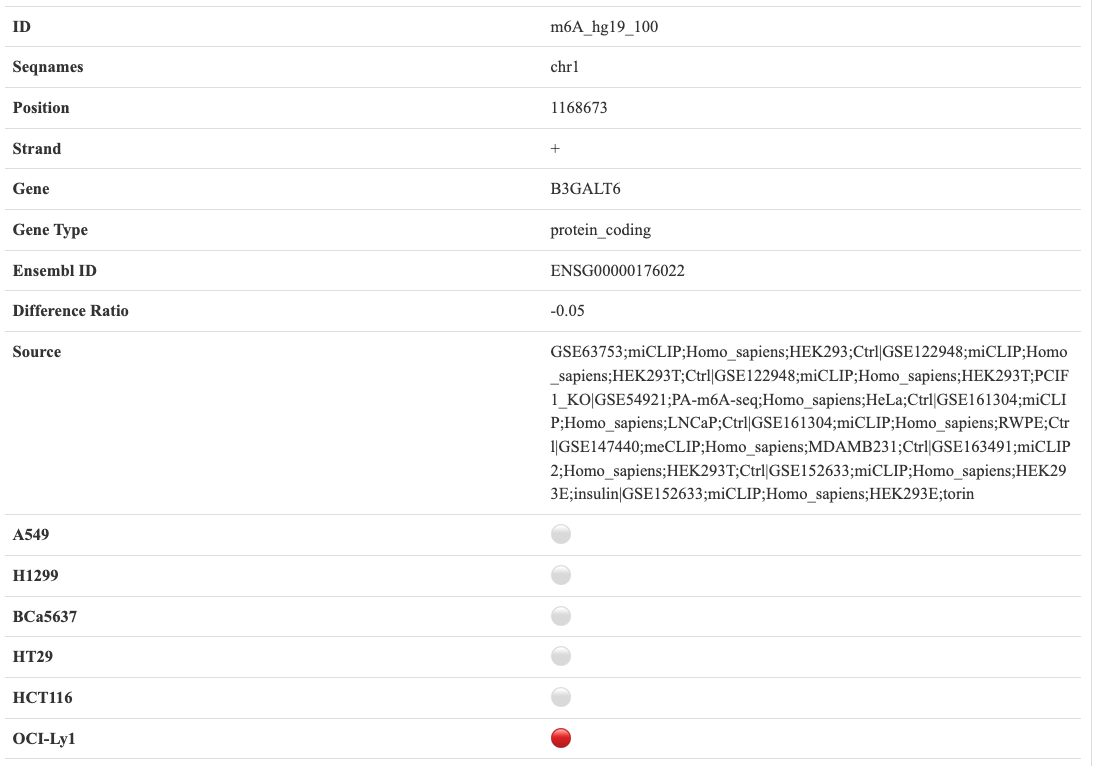
Users could click an ID for detailed information with tissue contexts which shown below the table.
Tool
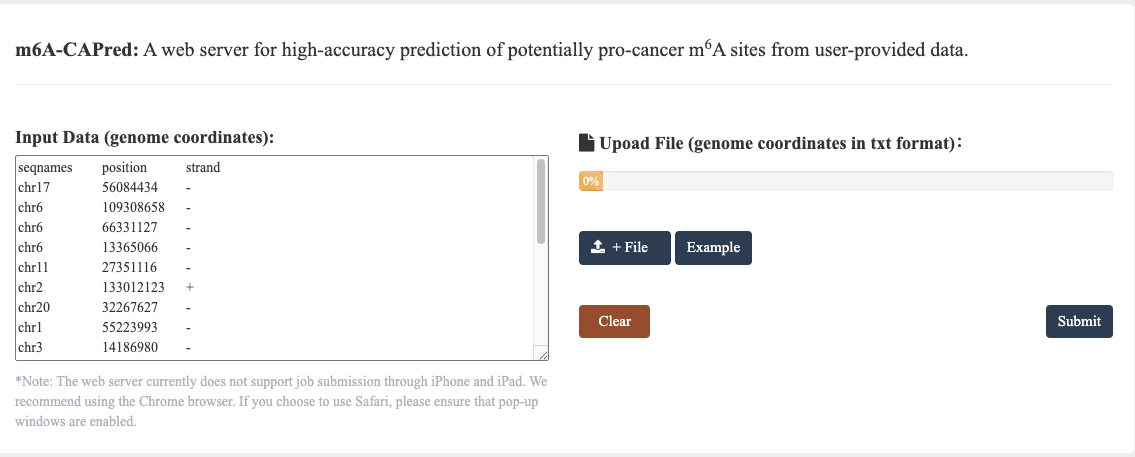
Users can input or upload the query sequences in the txt format. The txt file should include three columns which are seqnames, position and strand, respectively. Results will be presented after a while.
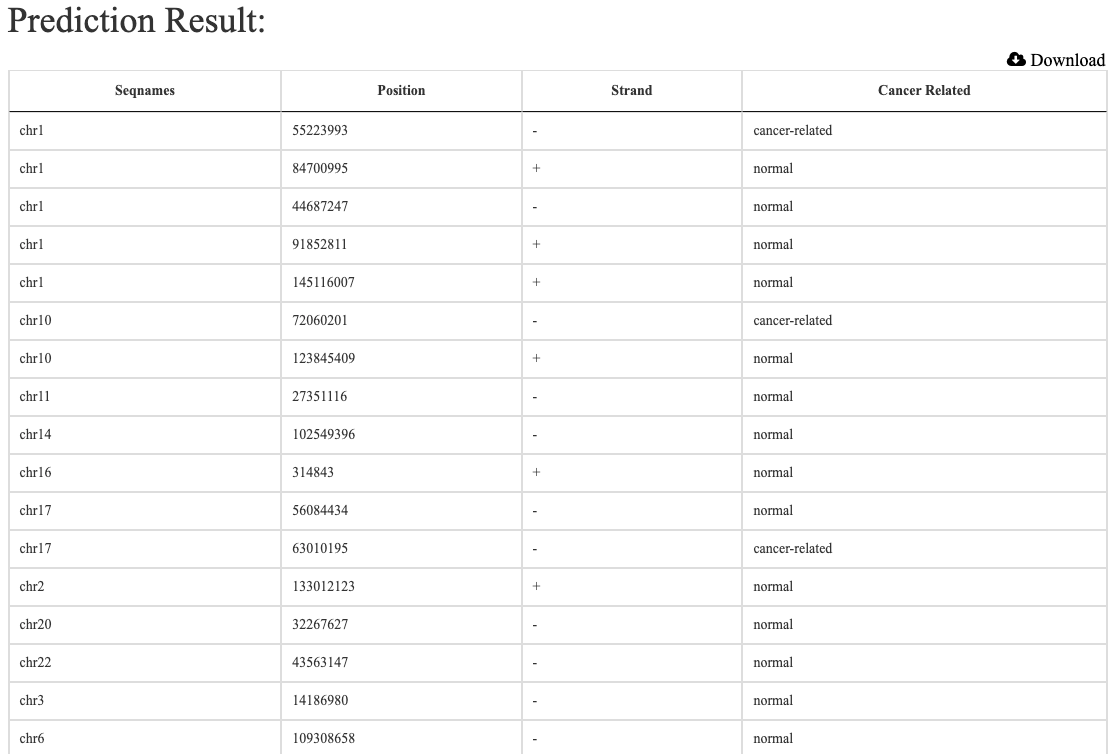
The result table shows seqnames, position, strand, prediction result.